Sunday, 26 February 2012

PlayStation Move.Me

Move.me isn’t a game. It's a software server application for the PS3 system that uses the PlayStation Move motion controller as an input device. We want to see what innovative applications programmers can create using the PS Move controller, the PS3, Eye camera, and a PC.

Move.me is designed for academic researchers, university instructors, college students, programming hobbyists, and HCI developers. Show us how you can take the PS Move beyond traditional gaming and into areas such as:

-Games and tools that support kids' physical fitness and nutrition.
-Kid-friendly programming interfaces for computer/technology classes or individual learning.
-Physical therapy and rehabilitation.
-Sports physiology or fitness training.
-Music and the creative arts.
-Augmented reality, 3-D, and other leading-edge technologies.
-Addressing physically-challenged or special education needs.


At the 2011 Game Developers Conference (GDC) Sony unveiled Move.Me,
We were given the chance to see the capabilities ourselves first hand allowing us to see the kit in its current stage.

When Sony had brought Move.Me to NUCA for us to experiment and witness its possibilities I was very impressed with the accuracy and possible capabilities than can be applied to some real important development ideas.
Knowing that if programmed correctly and designed with the right research and information, the Move.Me Kit can be used by organisations to create in-depth and valuable applications.

Education, Rehabilitation and Maintenance are all great areas that can be covered with the technology that is available with the PlayStation Move and able to work into something specific and useful with the Development Kit that Sony has provided with Move.Me.

What I would like to see from Move.Me in the hands of capable programmers is the means of a high quality and well-designed educational program that is capable of captivating the attention of its young audience through fun and relevance to their need of education.

I can also see this being useful and potentially valuable to the rehabilitation and education of children with Mental Disabilities with the proper backing and research they can produce something perfectly accurate for what they would need for such treatment within the applications.

"For a long time I've mentioned in my talks that we'd like to let more people innovate with Move," Sony's Dr. Richard Marks said during DICE. "I would really like to see it happen, so all the really creative minds in the labs and the hobbyists can actually play around with it."

http://arstechnica.com/gaming/news/2011/03/moveme-brings-playstation-move-development-to-your-pc-this-spring.ars

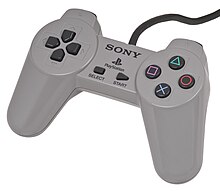
Controller Designs of the PlayStation.

Released in 1994, the PlayStation control pad was the first controller made for the original PlayStation. It featured a basic design of a D-pad, 4 main select buttons (Triangle, Circle, Cross and Square) and start and select buttons on the face. 'Shoulder buttons' are also featured on the top (L1, L2, R1, R2). In 1996, Sony released the PlayStation Analog Joystick for use with flight simulation games. The original digital controller was then replaced by the Dual Analog in 1997, which added two analog sticks based on the same potentiometer technology as the Analog Joystick. This controller was then also succeeded by the DualShock controller.

Released in 1998, the DualShock controller for the PlayStation succeeded its predecessor, the Dual Analog, and would go on to become the longest running series of controllers for the PlayStation brand. In addition to the inputs of the original, digital, controller, the DualShock featured two analog sticks in a similar fashion to the previous Dual Analog controller, which can also be pressed to activate the L3 and R3 buttons.
On the PlayStation 3 Sixaxis and DualShock 3 controllers, the analog sticks are always enabled. Beginning with the Sixaxis, a 'PlayStation button' (which featured the incorporated PS logo and is similar in function to the Xbox 360 "Guide" button) was included on controllers. The PlayStation button replaces the "Analog" button of the DualShock and DualShock 2 controllers. Pressing the PS button on the PS3 brings up the menu, while holding it down brings up system options.


PlayStation Move is a motion-sensing game controller platform for the PlayStation 3 video game console by Sony Computer Entertainment. Based on the handheld motion controller wand, PlayStation Move uses the PlayStation Eye webcam to track the wand's position and the inertial sensors in the wand to detect its motion, First revealed on June 2, 2009.
Although PlayStation Move is implemented on the existing PlayStation 3 console, Sony states that it is treating Move's debut as its own major "platform launch," planning an aggressive marketing campaign to support it.

History of Playstation

The original PlayStation released in December 1994 was the first of the ubiquitous PlayStation series of console and hand-held game devices. It has included successor consoles and upgrades including the Net Yaroze (a special black PlayStation with tools and instructions to program PlayStation games and applications), "PSone" (a smaller version of the original) and the PocketStation (a handheld which enhances PlayStation games and also acts as a memory card). It was part of the fifth generation of video game consoles competing against the Sega Saturn and the Nintendo 64. By March 31, 2005, the PlayStation and PSone had shipped a combined total of 102.49 million units, becoming the first video game console to sell 100 million units.

Released in 2000, 15 months after the Dreamcast and a year before its other competitors, the Xbox and the Nintendo GameCube, the PlayStation 2 is part of the sixth generation of video game consoles, and is backwards-compatible with most original PlayStation games (an original PlayStation (not PlayStation 2) memory card is required to save games). Like its predecessor, it has received a slimmer redesign, and was also released built-in to the PSX DVR and the Sony BRAVIA KDL22PX300 HDTV. It is the most successful console in the world, having sold over 150 million units as of January 31, 2011. On November 29, 2005, the PS2 became the fastest game console to reach 100 million units shipped, accomplishing the feat within 5 years and 9 months from its launch. This achievement occurred faster than its predecessor, the PlayStation, which took "9 years and 6 months since launch" to reach the same figure.

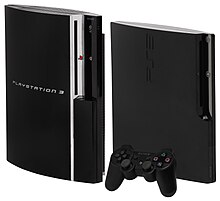
Released on November 11, 2006, the PlayStation 3 is the third and current iteration in the series. It competes with the Xbox 360 and the Wii in the seventh generation of video game consoles. It is the first console in the series to introduce the use of motion controls in games through the use of the SIXAXIS Wireless Controller along with other features, such as Blu-ray Disc and Full High-definition resolution graphics capability. The PlayStation 3 comes in 20 GB, 40 GB, 60 GB, 80 GB, 160 GB, 120 GB, 250 GB, and 320 GB, with only the 160, and 320 being the current models. Like its predecessors, a slimmer redesigned model of the console has been released. As of December 25, 2010, the PlayStation 3 has sold 41.5 million units worldwide according to Sony Computer Entertainment.

Final Artwork for Interactive Pages.

This is the final artwork pages that will be used in the interactive narrative project, I had to cut two alternate endings from the final draft as I felt that I would rather focus on more deeper and interesting arcs of the story to be finished.
I also wouldn’t be able to animate each of the panels like I had in mind as time was spent more on producing high quality illustrations and artwork rather than small ominous animations that would be ignored or looked past rather quickly.


Comic Art Terms: Different Shots.


Panels.

A Panel is an individual frame, or single drawing, in the multiple-panel sequence of a comic strip or comic book. A panel consists of a single drawing depicting a frozen moment.


Panel Breakouts.


In a breakout panel, the drawing does not stay within the panel borders. Part of the drawing, such as a hand, food, or object, may extend beyond the panel’s border, as if breaking out of the panel. This helps to give a greater sense of action.


Establishing Shot. 
Large/Open images that use simple aspects to inform the viewer of the basic information of the story (Time/Location/Setting.)
Medium Shot.

Specification of the scene/character/location. Usually used to show an important action. Sometimes can be used to show multiple character interacting.


Close up.

Showing a character or object specifically. Not showing the entire body and more focused on emotion.

Extreme Close Up.


Shots used to show something absolutely specific, usually on faces. Accompanied with text,
Can be used to show emotions subtly or in extreme situations


Action Lines.
In comics, action lines (or movement lines or motion lines or speed lines) is a term that refers to the abstract lines that appear behind a moving object or person to make them look like they’re moving quickly.
The use of motion lines may have been inspired from both mathematical vectors, which are used to indicate direction and force, and from long-exposure photography, where a camera can capture lights as they move through time and space, blurred along the direction of motion.

The Kuleshov Effect

The portrayal of a character through the order of which scenes are shown, explaining to the audience clearly of what the character is about and how they are thinking at the current scene.


As Alfred Hitchcock explains here in a clip of film from 1964 that the sequencial arrangement of scenes can portray an image and character in a various amount of ways.

Storyboards for the choices.

There were various choices for what I had in mind for the main choice for how the player could let Kato deal with the situation.
There were going to be three main choices called Combat, Assassin and Stealth.
Combat was mainly focused on being abrupt and head on, Stealth was making sure you were never caught and Assassin was a mixture of both.

Combat


Assassin


Assassin/Combat

Assassin/Combat End
Assassin Kunai Hit

Miss


Stealth.